Tetraethyl Orthosilicate TEOS Crosile® Si28

Chemical Properties
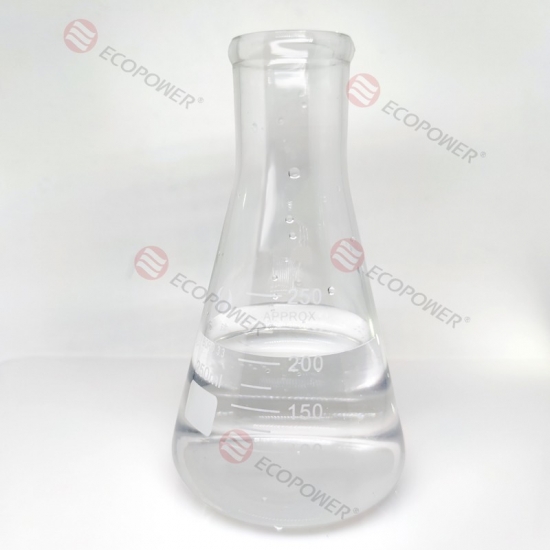
Crosile® Si28 is a partially hydrolyzed tetraethyl orthosilicate (Ethyl Silicate 28) with a silica (SiO₂) content of 28.8–29.5%. It is a clear liquid soluble in organic solvents such as ethanol, toluene, and benzene. Upon hydrolysis, it forms a durable silica network with excellent heat, chemical, and weather resistance.
Equivalent type
ethyl silicate 28, TEOS, ethyl silicate, tetraethyl orthosilicate, tetraethyl silicate, tetraethoxysilane, silicic acid (H4SIO4), tetraethyl silicate Ester, Tetraethyl Silicate
Specifications
|
Test Item
|
Target Values(Spec, Limits)
|
|
Appearance
|
Colorless Transparent Liquid
|
|
Chroma (APHA)
|
<10
|
|
Content
|
>99.5%
|
|
Specific gravity at 20°C
|
0.929-0.936
|
|
Silicon dioxide content
|
28%
|
|
Acidity (as HCL)
|
<0.001
|
|
Other content
|
0-5ppm
|
|
Viscidity
|
0.97 cps
|
Tetraethyl Orthosilicate Application
Coatings & Paints
- Binder component for heat-, chemical-, and weather-resistant coatings.
- Improves adhesion to glass and other inorganic substrates.
- Used as a modifying additive in paints, varnishes, and protective coatings.
- Forms a fast-drying, durable silica film with good water resistance and stable gloss after hydrolysis.
- Suitable for heat-resistant and corrosion-resistant coating systems.
Polymer & Silicone Applications
- Crosslinking agent for silicone rubber.
- Additive for specialty polymer systems.
- Used in functional films and barrier coating formulations.
Chemical Industry
- Precursor for the production of high-purity amorphous silica.
- Intermediate for sol-gel processes.
- Intermediate for organic synthesis.
Metallurgical Engineering
- Binder for ceramic molds used in investment casting.
- Binder component for refractory materials.
- Suitable for high-temperature molding and investment casting applications.
Glass Manufacturing
- Improves the water repellency of glass surfaces.
- Enhances chemical resistance and surface durability.
- Suitable for glass and ceramic surface treatment formulations.
Key Benefits
- Silica content: 28.8–29.5%
- Excellent compatibility with common organic solvents
- Excellent heat resistance
- Excellent chemical resistance
- Good weather resistance
- Forms durable silica networks after hydrolysis
- Good adhesion to inorganic substrates
- Suitable for coatings, foundry, polymer, and specialty chemical applications


 Whatsapp us