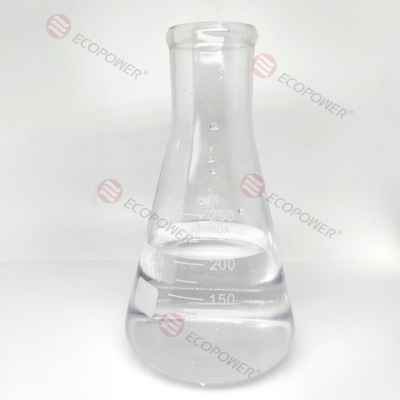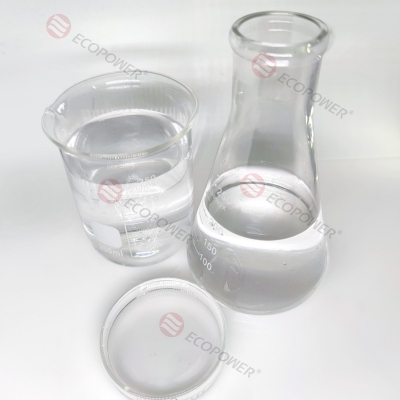
Crosile® 7697 is a solvent-free anchoring silane coupling agent that can be directly added to solvent-free silicone release systems, significantly improving the adhesion of silicone coatings to untreated PET films—eco-friendly, highly efficient, and cost-effective.
Crosile® 201 is the basic monomer of the silane coupling agent. The product is colorless transparent liquid. It is insoluble in water and can react with water slowly, but easily to trigger hydrolysis cross-linking reaction in the acid or alkaline environment, which is main basic material used in compounding methoxy silane coupling agent.
Amino Silane Crosile® 550 :gamma-aminopropyltriethoxysilane, a versatile amino-functional coupling agent may be an excellent candidate for use in a range of broad applications to provide superior bonding between inorganic substrates and organic polymers.
A comparative study of α- and γ-functional silane coupling agents in silica-filled SBR vulcanized with conventional sulfur systems shows that the effects of silanes on vulcanization kinetics and their coupling effects depend on their structure and location. Rubber reactive groups. All tested silanes containing mercapto or sulfide functional groups resulted in improvements in tensile properties and affected the cure kinetics of the systems used.
Vinyl silane refers to an organosilicon compound with the chemical formula CH2=CHSiH3. It is a derivative of silane (SiH4). The compound is a colorless gas and is mainly of theoretical interest.
AminoSilane Coupling Agent Crosile is a chemical substance with the molecular formula H2NCH2CH2CH2Si (OC2H5)3, which is used in various industries such as glass fiber reinforced plastics, coatings, castings, plastics, adhesives, sealants, textile printing and dyeing. Amino Functional Silane is the tackifier of RTV silicone rubber. It has two functional groups, namely amino and ethoxy.
Tetraethyl orthosilicate, also known as tetraethoxysilane (TEOS), is an organic compound denoted by the formula Si(OC2H5)4. This colorless liquid undergoes degradation when exposed to water. TEOS serves as the ethyl ester of orthosilicic acid, Si(OH)4, and is widely recognized as the predominant silicon alkoxide.