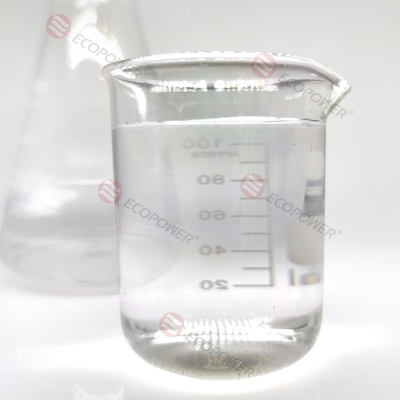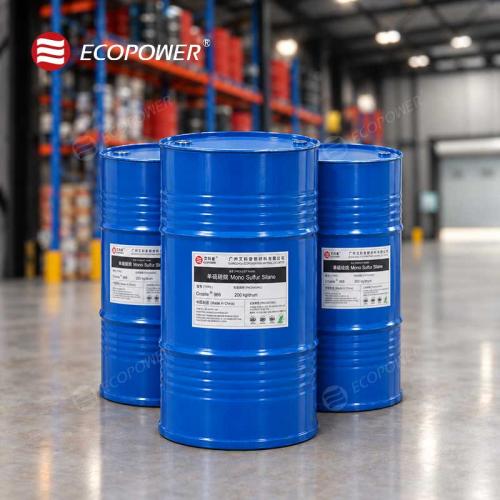
Crosile®CPTEO is the main raw material for preparing Si-69, KH-550 and other silane coupling agents. It is also used as a rubber processing aid to couple inorganic fillers in various halogenated rubber to improve various physical and mechanical properties. It can also be used to synthesize organosilicon compounds containing quaternary ammonium cations, as antifungal and odor-proof finishing agents, with special bactericidal, odor-proof, antistatic and surface activity.

Precipitated silica, a form of synthetic amorphous silicon dioxide, is derived from quartz sand, a crystalline form of silicon dioxide. The physical properties of precipitated silica can be manipulated during the manufacturing process to deliver products with a wide range of performance-enhancing features engineered for many different end-use applications.
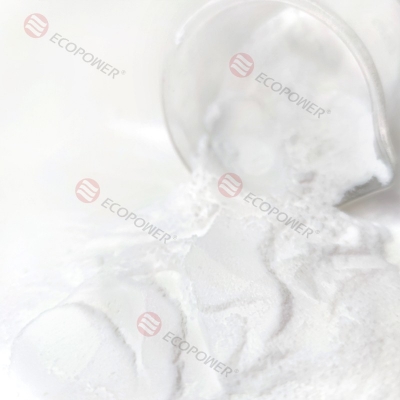
PPG Silica140 Powder White Powder form, it can be dissolved by NaOH, HF. Other kinds of acid, water and solvents cannot dissolve the product. Resistance to high temperature, no combustion, good insulation, odourless properties
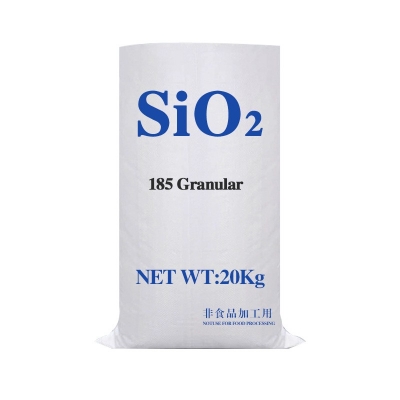
White granular Precipitated Silica Felcosil-195GR form with low dust, it can be dissolved by NaOH,HF. Other kinds of acid, water and solvents cannot dissolve the product.
White powder form superfine silica. It is a wax treated, medium particle sized precipitated silica. Very low viscosity impact, high surface smoothners and sedimentation behavior.
Crosile® 69s is a mixture of Crosile® 69s silane coupling agent and precipitated silica with the same function as liquid Crosile® 69 but easier to operate. It can improve the physical and mechanical properties of rubber and greatly strengthen tensile strenth, antitearing strenth, abrasion resistance, reduce the permanent deformation and viscosity of gross rubber, improve process property. Suitable polymers include NR, IP, SBR, BR, NBR, EPDM, etc.
Crosile® 75 (Bis(3-triethoxysilylpropyl)disulfide) TESPD is a Disulfide Silane Coupling Agent ,polysulfidic organosilane and has been widely in the rubber industry. Crosile® 75 Silane couling agent is used to improve the reinforcing capability of fillers with silanol group on their surface,and also as an integral part of curing systems to improve cross-linking network properties.
One end of its structure with reactive groups such as amino and vinyl, can react with epoxy, phenolic, polyester and other synthetic resin molecules. The other end is alkoxy (such as methoxy, ethoxy etc.) or chlorine atoms which are connected with silicon.